Quick Summary
- Ube is a purple yam, so it is not the same as purple sweet potato or taro.
- 100 grams contains about 120 calories and 4 grams of fiber, therefore it’s a filling side dish, but it’s not low in calories.
- The anthocyanins that give it its purple color are also strong antioxidants, which can help protect your cells.
- When cooked, it has a low glycemic index, so it can help you avoid sudden blood sugar swings and the binge eating that follows.
- It can support weight loss best when you eat it boiled or baked, as a side dish.
So can ube really help you lose weight, or is it just a beautiful purple trend that swept through social media? Surely you’ve also seen a purple latte, purple donuts, or purple ice cream, and then wondered whether it’s actually healthy. In this article, we’ll therefore look behind the scenes together, so you know when this special tuber can be your friend and when it can’t.
By the end of this article, I’d also like you to know exactly how to fit purple yam into your lifestyle change. However, this won’t be about a miracle food, but rather about a nourishing ingredient rich in fiber. When you use it wisely, it can complement your balanced diet well.

1. Ube Is Not Purple Sweet Potato, and It’s Not Taro Either
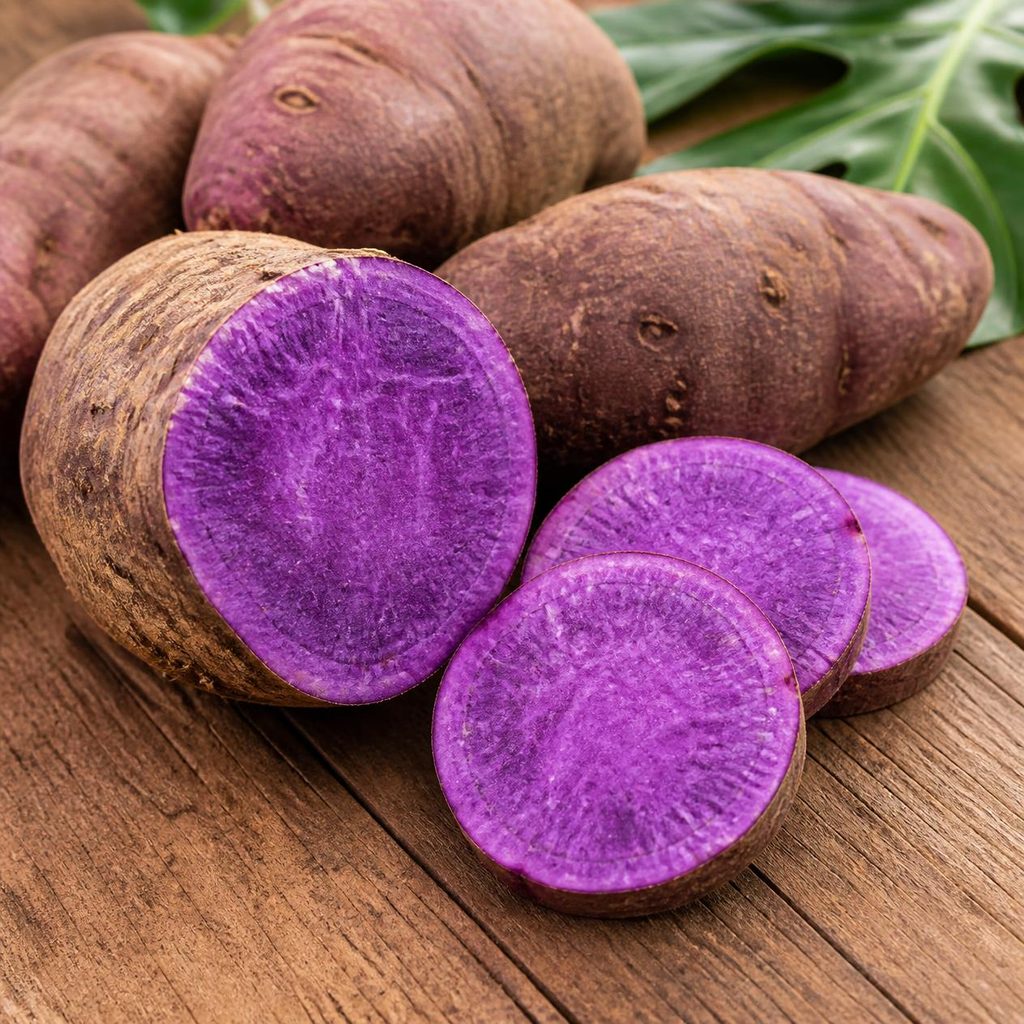
First of all, let’s start with a very common mistake! Many people confuse ube with purple sweet potato or taro, although they are three different plants. This tuber belongs to the yam family, its scientific name is Dioscorea alata, and it’s also a popular ingredient, especially in the Philippines.
So how can you recognize it? Here are the most important differences, then:
- The skin of purple yam is brownish and rough, while the inside is deep purple or lavender.
- Purple sweet potato, on the other hand, usually has thinner, purplish skin, and its flavor is also sweeter, more like a sweet potato.
- Taro, however, is whitish inside with tiny purple specks, and its flavor is much more neutral.
Why does this matter to you, then? That’s because their nutritional value and uses also differ. So if you see ube in a recipe but buy purple sweet potato instead, the result will also be different. Moreover, stores often use the word “purple” loosely, therefore it’s worth reading the label.
Fresh ube is hard to find, so you’ll more likely get it in Asian stores or online. Generally, you’ll come across it frozen and grated, as a powder, or as an extract.
Its flavor can also be surprising at first. It’s mildly sweet, a little vanilla and nutty, so it holds its own in both savory and sweet dishes. After cooking, it becomes creamy and soft, similarly to pumpkin. Because of this, it works especially well in purées, cream soups, and breakfast porridges. If you love pumpkin or sweet potato, then you’ll most likely love this one too. Source
Related Articles:
8 Reasons Why Ube Is Becoming So Popular in a Healthy Diet
5 Healthy Ube Recipes When You Want to Make Something Special at Home
2. The Nutritional Value of Ube
If you want to lose weight, you’re surely curious about the numbers. Purple yam is a starchy tuber, similarly to potatoes. This isn’t a problem in itself, since carbohydrates are one of your body’s main energy sources. The real question, however, is how much of it you eat and in what form.
So let’s look at a table of what 100 grams of ube contains:
| Nutrient (100 g) | Amount | What does this mean for you? |
|---|---|---|
| Energy | about 120 kcal (raw), about 140 kcal (cooked) | Moderate calorie content, so it fits well as a side dish. |
| Carbohydrates | 27 g | It gives you lasting energy, but watch your portion size. |
| Fiber | 4 g | It helps you feel full and also supports digestion. |
| Protein | 1 g | It’s low, so always pair it with a protein source. |
| Fat | 0.1 g | It’s almost fat free when you don’t fry it in oil. |
| Vitamin C | a cup provides about 40% of the daily value | It supports your immune system. |
Overall, 4 grams of fiber per 100 grams is a nice amount for a tuber. Fiber slows down digestion, so you feel full longer. Also, since there’s almost no fat in it, most of the calories will depend on how you prepare it.
So how should you portion it? A good starting point, for example, is to fill a quarter of your plate with it, another quarter with protein, and half with vegetables. This way, the purple side dish fills you up, but it doesn’t use up a big part of your daily calorie budget. And if it’s a workout day, you can also take a little more, since carbohydrates help with recovery. This simple plate model also works for any starchy side dish, not just this one. Source
3. Anthocyanins Give It Its Color, and That’s Good News for You
Of course, the beautiful purple color of this tuber doesn’t just look good in photos. This color comes from plant pigments called anthocyanins, which also belong to the flavonoid family. These same compounds are also responsible for the color of blueberries, blackberries, and red cabbage.
So why should you pay attention to them? Anthocyanins work as antioxidants, in other words, they can help neutralize free radicals. According to research, they may also be linked to reducing inflammation and lowering blood pressure.
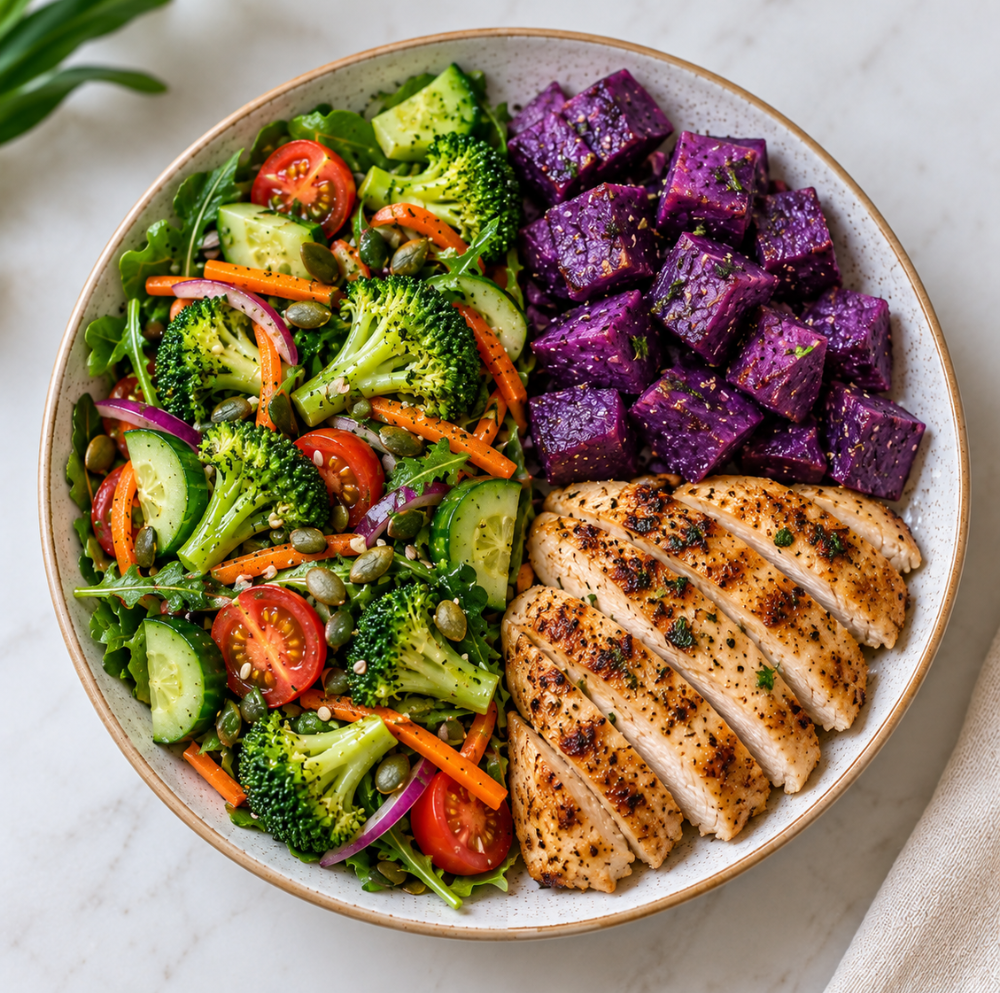
When you put greens, red bell pepper, or orange pumpkin next to purple yam, you can get lots of different antioxidants. Moreover, a colorful plate is also much more appealing to the eye, so you’ll enjoy eating it more. Source
4. Its Low Glycemic Index Can Help Prevent Binge Eating
This is perhaps the most interesting point when it comes to weight loss. Basically, the glycemic index shows how quickly a food raises your blood sugar. So the lower its value, the slower and more evenly sugar enters your blood.
What does this mean in everyday life, then? If your blood sugar doesn’t spike suddenly, then it won’t drop quickly either. So you’re less likely to find yourself starving in front of the fridge an hour later. In the long run, this can therefore help a lot in sticking to your goals.
However, pay attention to one thing! The glycemic index also depends on how you prepare the food and what you pair it with. When you eat purple yam with protein, for example chicken, eggs, or legumes, your blood sugar can stay even steadier. Source
5. Resistant Starch Also Supports Your Gut Flora
Have you heard of resistant starch before? In fact, it’s a type of starch that your small intestine can’t fully digest. Instead, it reaches your large intestine, where it feeds the beneficial bacteria, so it behaves like fiber.
Why is this interesting for weight loss, then? A healthy gut flora is also linked to digestion, metabolism, and feeling full. Moreover, thanks to regular digestion, you may feel lighter and less bloated.
Here’s a useful tip, though: tubers that cool down after cooking usually form more resistant starch. Therefore, if you cook the ube in advance and add it cold to a salad the next day, your gut flora may also thank you. Source
6. The Cooking Method Decides Everything
Now, finally, comes the most important part! After all, purple yam on its own is an almost fat free tuber with a moderate calorie content. Whether it supports or slows down your weight loss, therefore, depends almost entirely on how you prepare it.
Here are, above all, the cooking methods that support your figure:
- Boiling is the simplest solution, and according to research, its glycemic index is also the lowest this way.
- Steaming keeps the beautiful purple color as well as most of the nutrients.
- Baking in the oven with a little olive oil also gives you a crispy, tasty side dish.
- Mashing is great when you make it creamy with yogurt or a little plant milk instead of butter and cream.
And what you should rather avoid if you want to lose weight:
- Deep frying, however, multiplies the calorie content.
- A spread similar to jam, cooked with condensed milk and butter, is more of a dessert than a side dish.
- Sweets made with sugary syrups also quickly use up a big part of your daily calorie budget.
One important safety rule, however: never eat yam raw! Always cook or bake it thoroughly before you eat it. When peeling, it’s also worth wearing gloves, because the skin can irritate some people’s skin.
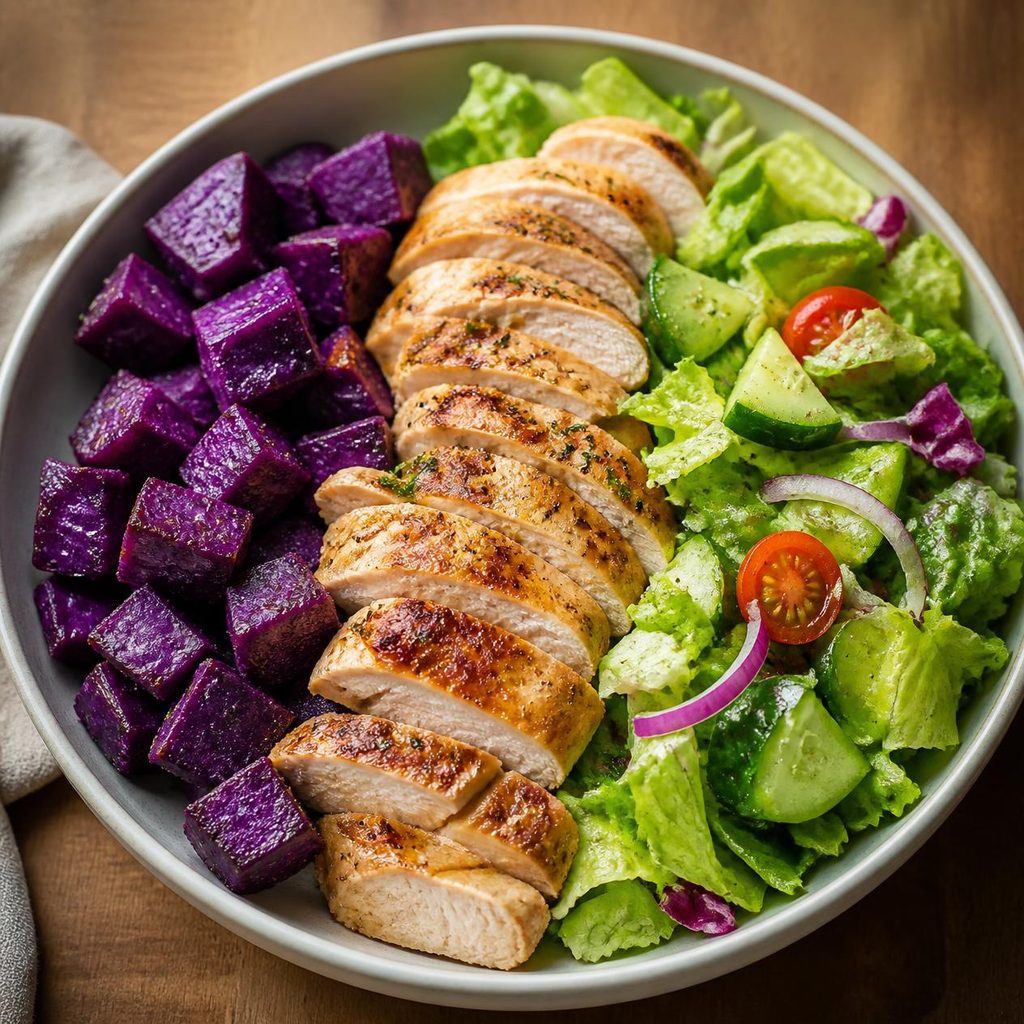
Ube on Your Plate: Simple Ideas for Everyday Life
Of course, a new ingredient can feel unusual at first. That’s why I’ve collected a few easy ideas so you can confidently get started:
- Make a purple purée and serve it with roasted chicken breast or salmon, so you get a colorful, filling lunch.
- Cube it, roast it in the oven with a little oil and spices, and then add it to a warm salad with chickpeas.
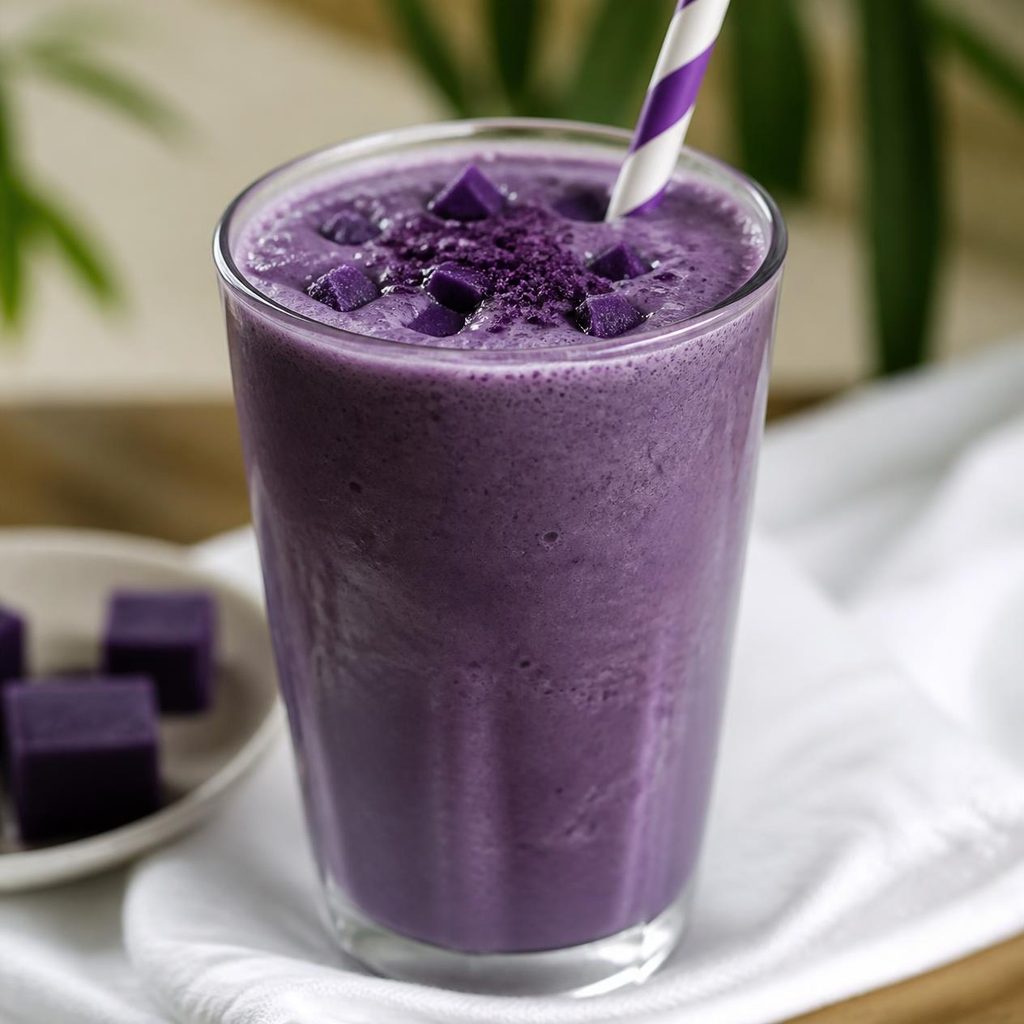
- Blend the cooked, cooled tuber with Greek yogurt and a little cinnamon, so you get a creamy purple breakfast.
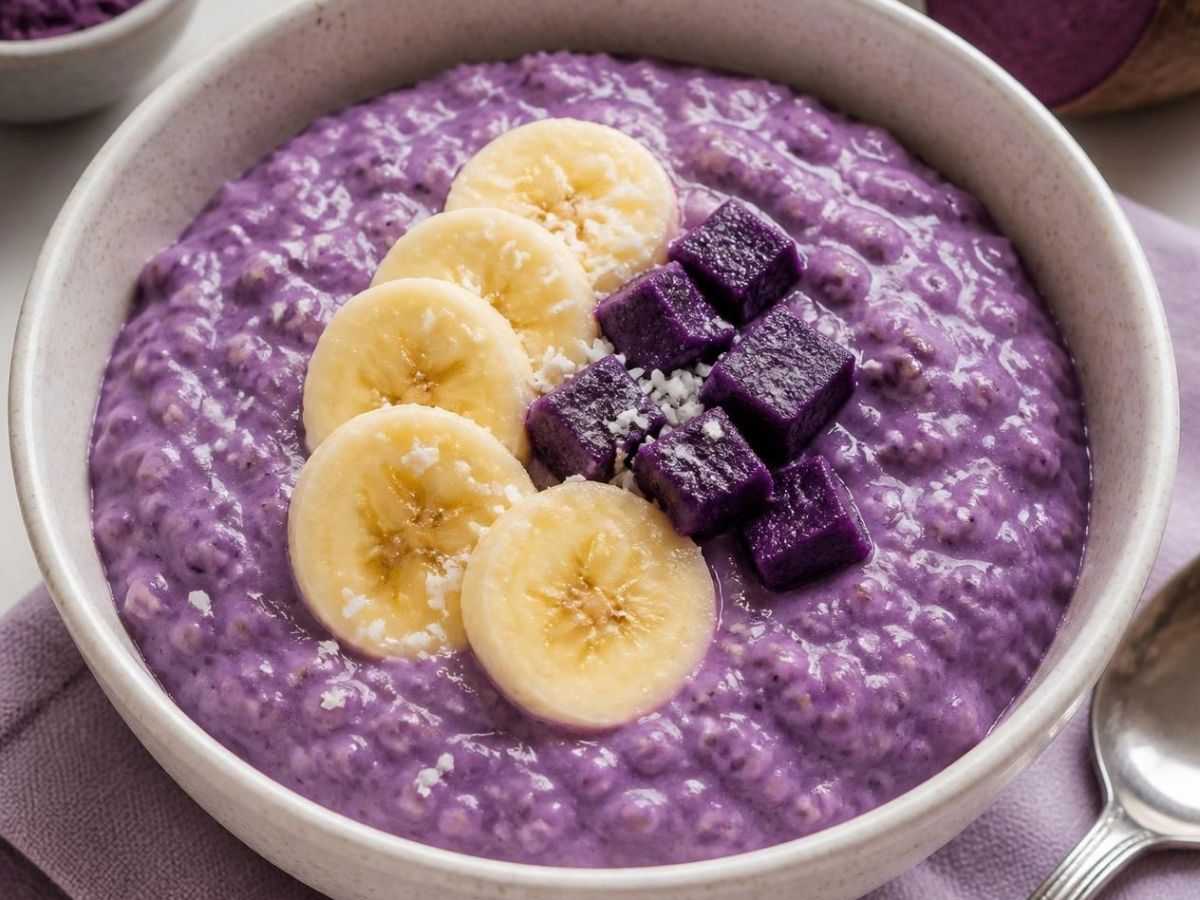
- Also stir a tablespoon of ube powder into your oatmeal, because it gives a nice color and a mild vanilla, nutty flavor.
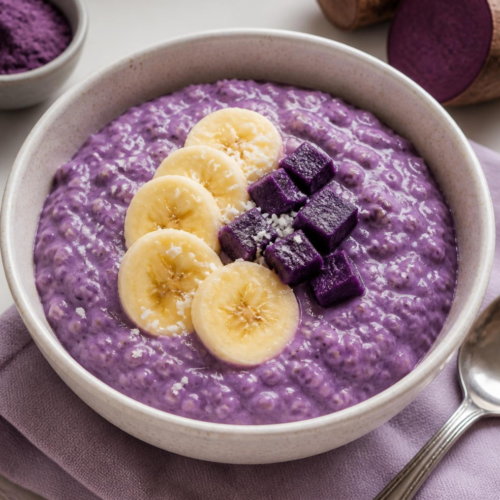
Ube Oatmeal (Purple Yam Oatmeal)
Ingredients
- 40 g rolled oats
- 200 ml plant milk for example coconut or almond milk
- 60 g ube purée cooked, mashed purple yam
- 1 tsp chia seeds
- 1/2 tsp vanilla extract
- 1 pinch salt
- 1 tsp maple syrup optional
- 50 g Greek yogurt
- 1 tbsp shredded coconut
- 1 handful fresh berries
Instructions
- First, combine the oats, the plant milk, and the pinch of salt in a small pot, then bring it to a boil over medium heat.
- Then lower the heat and cook it for 4–5 minutes while stirring, until the oats soften and thicken.
- Next, stir in the ube purée, the chia seeds, and the vanilla extract, and cook for another 2–3 minutes until the oatmeal is evenly purple and creamy.
- Afterward, remove it from the heat, sweeten it with maple syrup if you like, and let it rest for 1–2 minutes so the chia seeds can also swell.
- Finally, serve it with Greek yogurt, shredded coconut, and fresh berries.
Notes
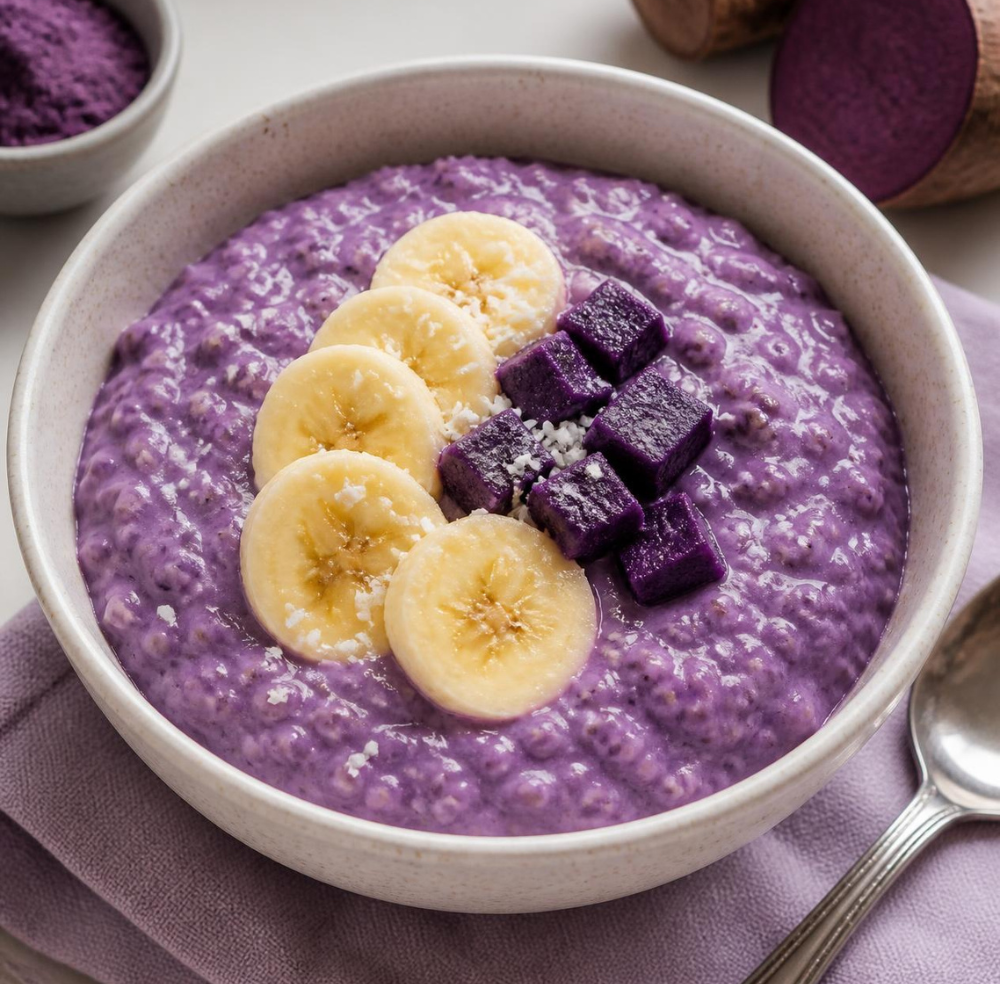
7. Ube Desserts Are Not Diet Foods
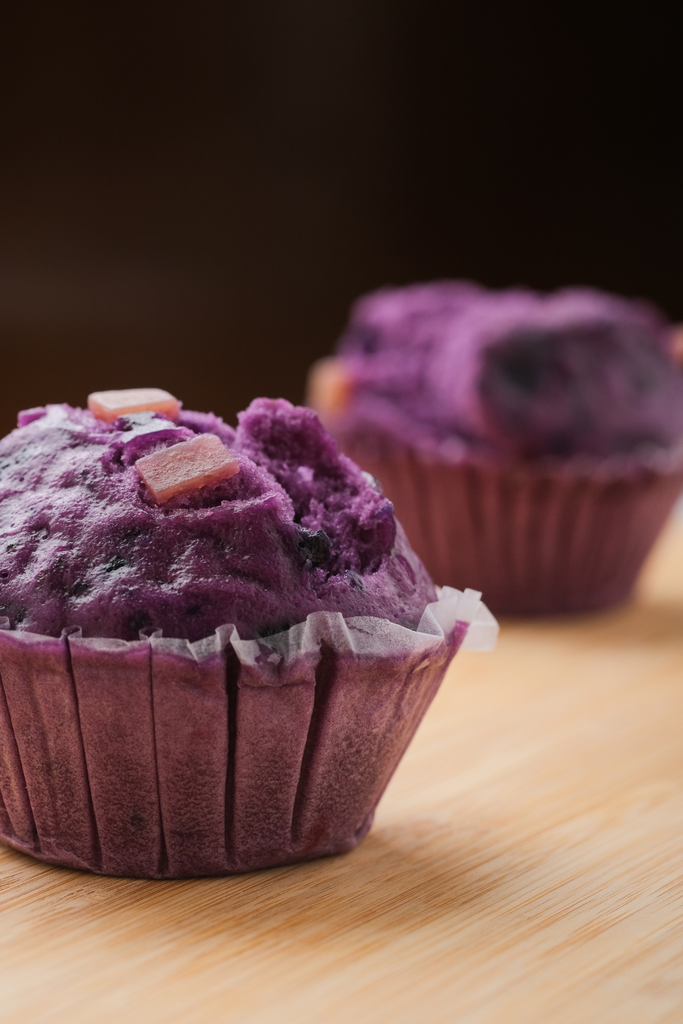
Finally, let’s also talk honestly about sweets. Most of the purple donuts, cheesecakes, and ice creams you see on social media won’t support your weight loss, though. Generally, most of them contain purple yam jam (ube halaya), which also has plenty of condensed milk, butter, and sugar.
Moreover, with many products you don’t even get real ube. Ube extract from the store often contains only flavoring and coloring, so you get none of the benefits of anthocyanins and fiber. Therefore, always check the ingredient list before you put anything in your cart.
Of course, this doesn’t mean you can never eat an ube dessert! After all, a lifestyle change is not about restrictions but about conscious choices. So when you occasionally make a lighter ube treat, enjoy every bite, just don’t think of it as a diet food.
If you can, then choose the homemade version. This way, you decide how much sugar and fat goes into it, and you can also work with real, cooked purple yam. As a result, the dessert also gets closer to your goals.
Would you like a healthy lifestyle to be more than just a “starting Monday” plan? Make it an easy, everyday part of your routine, and check out my ebooks! Inside, you’ll find tried-and-tested recipes, clear guides, and plenty of ideas, so you can move forward step by step.
Frequently Asked Questions
Not on its own, since it’s a tuber with moderate calories, plenty of fiber, and almost no fat. What matters, however, is how big your portion is and how you prepare it. When you eat it cooked, as a side dish, a portion the size of your palm easily fits into your lifestyle change.
There’s no single rule, but it’s worth treating it like potatoes or brown rice. For one meal, about 100-150 grams of cooked purple yam is therefore a good starting point, together with protein and vegetables. If you’re unsure, then ask a dietitian for advice.
When cooked, it has a low glycemic index, so according to researchers, it can also fit well into the diet of people with diabetes. Nevertheless, always talk to your doctor or dietitian before you change your diet.
Dried ube powder can keep part of the fiber and anthocyanins, so it’s a good alternative when you can’t find fresh ube. Ube extract, however, is mostly just flavoring and coloring, therefore you can’t expect its benefits from it. So always read the label!
Although it’s rare, it can happen. Symptoms can include hives, itching of the mouth or lips, as well as nausea. If you experience this, then stop eating it and see a doctor.
You rarely come across the fresh tuber, but it’s increasingly available in Asian grocery stores and online shops in many forms. Generally, you’ll find a frozen, grated version, dried powder, or extract. If you want it for its benefits, then choose the frozen tuber or a pure powder without additives, and always check the ingredients. And if you can’t find anything, purple sweet potato can also be a good alternative, although its nutritional value is a little different.
Summary
Ube is so much more than a trendy ingredient with a pretty color. It’s rich in fiber, has a low glycemic index, and is also full of anthocyanins, therefore, as part of a balanced diet, it can really support your goals. The key, however, is to eat it as a side dish, boiled or baked, and not in the form of sugary desserts.
Now it’s finally your turn! Get a little ube or ube powder, and then try one of the ideas this week. Also, tell me in the comments how you liked it, and save this article to Pinterest so you always have it on hand. After all, a little purple on your plate is a big step toward a healthier you!