
Quick Summary
- Shows 8 reasons why matcha may be a better choice than coffee — for energy, antioxidants, digestion, mental focus, and weight loss.
- Matcha’s caffeine, paired with L-theanine, provides steady energy for 4 to 6 hours — without the coffee crash.
- A single serving of matcha can contain as many antioxidants as about 10 servings of traditional green tea — coffee’s antioxidant profile is quite different.
- It doesn’t acidify the stomach — ideal if coffee causes digestive discomfort for you.
- It doesn’t raise cortisol levels further — in fact, L-theanine helps moderate the stress response.
Have you noticed that you feel different after a cup of Matcha than after a cup of coffee? Yet are you still unsure whether Matcha is truly the better long-term choice for you?
Are you thinking about a lifestyle change or simply want to be healthier? Or perhaps, as a coffee drinker, you’ve already experienced the sudden spike and the crash that follows? Then this article is for you!
Especially if maintaining a steady all-day energy level matters to you, along with your hormonal balance, your skin’s condition, its youthfulness and beauty, and even support for your weight loss journey.
In this article, I’ll show you why Matcha is so trendy today and why more and more people are choosing Matcha tea or Matcha latte over traditional coffee. An honest look at Matcha, without the overhype, backed by personal experience and scientific evidence.
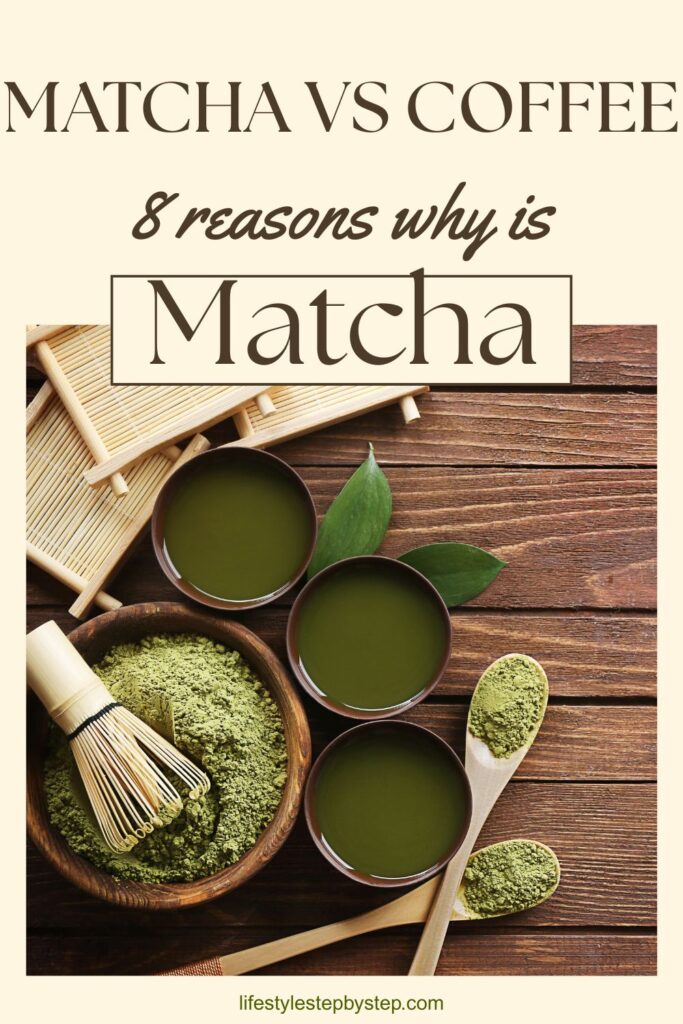
Why Did Matcha and Coffee End Up Facing Each Other?
One of the foundations of our modern lifestyle is energy. After waking up, before work and exercise, many of us reflexively reach for coffee. It’s no coincidence: it works fast, it’s easy to get, and we’re already used to it.
The problem starts with the fact that coffee gives you quick energy and then takes it away just as quickly. Heart palpitations, trembling, nervousness, headaches, afternoon exhaustion, depression… Sound familiar?
Matcha, on the other hand, works in a completely different way. Instead of shocking your system, it gently and gradually supports you, providing energy that can last for 6 to 8 hours. And that is precisely why more and more people are swapping their daily coffee for it.
| Aspect | Matcha | Coffee |
| Energy release | Slow, steady – 6 to 8 hours | Quick peak, then a crash |
| Caffeine content | ~70 mg per serving | ~95 to 150 mg per serving |
| L-theanine | Yes – calm alertness | None |
| Antioxidant content | Exceptionally high (EGCG) | Moderate |
| Effect on stomach | Gentle, doesn’t cause acidity | Causes acidity, can irritate |
| Cortisol (stress hormone) | Reduces it | Raises it |
| Blood sugar level | Stabilizes it | Can cause fluctuations |
| Teeth staining | Minimal | Significant |
| Fat burning support | Yes, without cortisol spike | Partially, with cortisol-raising effect |
| Hormonal effect | Neutral / positive | Can raise estrogen levels |
| Price (quality product) | Higher upfront cost | Lower |
| Preparation time | 2 to 3 minutes | 1 to 5 minutes (depending on machine) |

Related Articles
The Secrets of Matcha for Women: 8 Effects Your Body Will Love
Matcha for Weight Loss?! 5 Facts About How Matcha Helps You Achieve Your Dream Body
1. Matcha vs Coffee Energy – Lasting Energy or a Sudden Caffeine Jolt?
One of the most important differences between coffee and Matcha is the way energy is released.
- The difference between coffee and Matcha is best understood when you experience it yourself. Twenty minutes after your cup of coffee, you already feel the jolt, but the crash arrives just as suddenly. By the afternoon, you’re irritable, have a headache, and your mind is already on the next cup.
- With Matcha, things look completely different: the caffeine binds to L-theanine and is released slowly and evenly. You won’t get heart palpitations, you won’t tremble, and you won’t hit that 3 PM wall. Instead, the energy is quietly just there, from morning until early evening.
- If you’re a coffee addict, in the first few days you might feel that Matcha “isn’t strong enough.” This is normal: your body is used to being shocked, not supported. Give it a week.

That is exactly why, after a cup of Matcha latte, you feel alert but not tense. You can concentrate, yet you stay calm at the same time. This is especially important if you do mental work, study, or simply don’t want to spend the whole day on an emotional and physical rollercoaster. Source
2. L-Theanine: Matcha’s Secret Weapon
Among the benefits of Matcha, one of the most special is L-theanine, which is an amino acid found primarily in the leaves of the tea plant.
This compound:
- Increases the activity of alpha brain waves, which appear in the brain when we’re calm and relaxed, yet alert and focused at the same time. In other words, this is the state where we’re not stressed, but we can still think effectively.
- Reduces stress, anxiety, and depressive moods, because it supports the production of dopamine and serotonin (also known as the “feel-good hormones”).
- Improves concentration and memory, which is why so many people report thinking more clearly and staying focused more easily after consuming Matcha.
Coffee contains no L-theanine. That single fact explains why you feel tension after coffee and calm alertness after Matcha. The question is not which one gives you more caffeine, but rather which one gives you better brain function.
According to research, the combination of L-theanine and caffeine results in more accurate reaction time, better memory, and less perceived stress than caffeine alone.
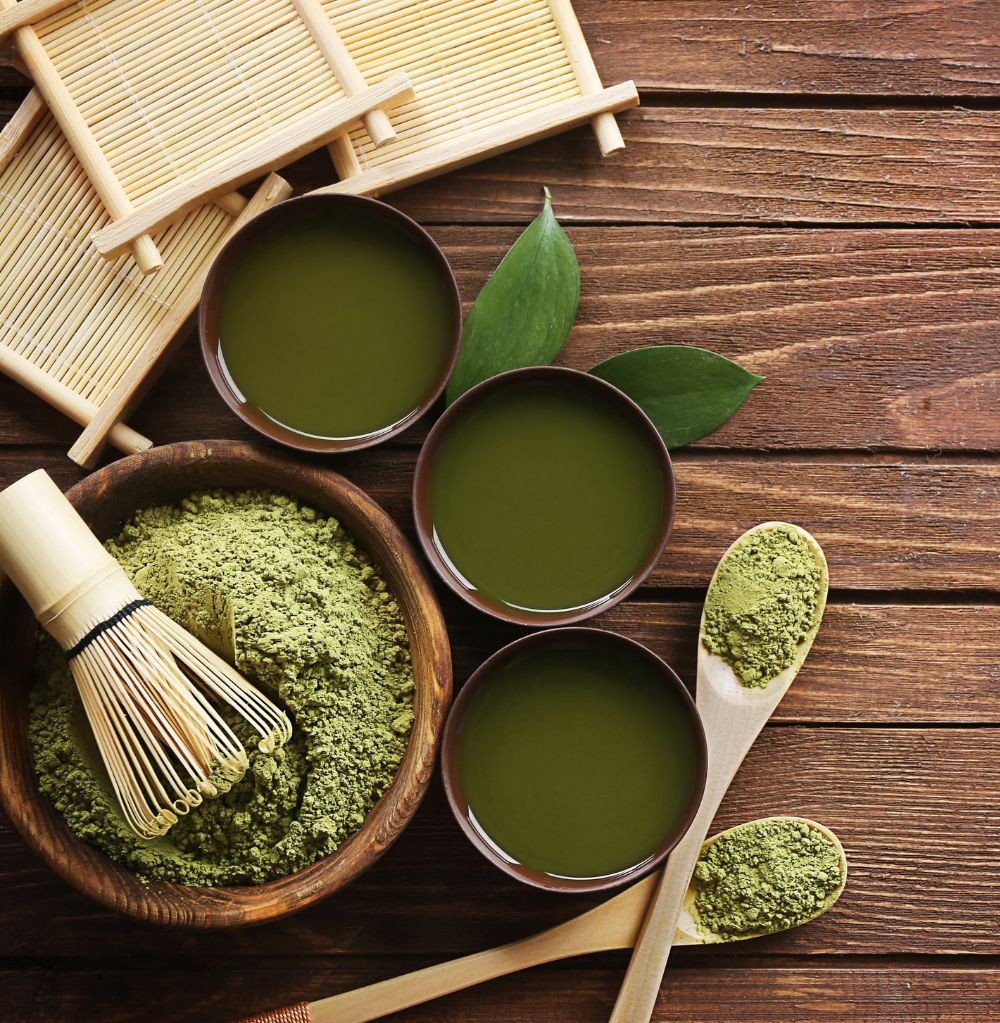
3. Antioxidant Powerhouse for Cell Protection
If your health matters to you, along with your skin’s condition, slowing down aging, or strengthening your immune system, then you’re in exactly the right place, because the antioxidants found in Matcha play a key role in all of these.
Matcha is one of the most powerful antioxidant sources in the world.
- A single serving of Matcha tea delivers roughly the benefits of 10 servings of traditional green tea, because you consume the entire tea leaf, not just the infusion.
- It can contain up to 14 times more antioxidants than blueberries, which are often referred to as a “superfruit.”
- Its EGCG content is exceptionally high, and EGCG has strong anti-inflammatory and cell-protective properties.
When compared to coffee: coffee also contains antioxidants, but significantly fewer, and on top of that, it causes acidity, burdens the stomach lining, and raises cortisol levels.
Matcha, by contrast, simultaneously provides antioxidant protection and anti-inflammatory effects, without burdening your system. This is the difference you’ll feel in the long run, in your skin, your immune system, and your overall sense of wellbeing.
The antioxidants in Matcha tea support the skin’s natural defense mechanisms, help slow down skin dehydration and the premature appearance of wrinkles, and with regular consumption, the skin can look fresher, more radiant, and healthier. Source

4. Weight Loss and Metabolism: Matcha or Coffee?
Let’s be honest about Matcha’s weight loss effects. Matcha is not a miracle cure, and it won’t melt 20 pounds off you overnight! However, it is a very powerful and natural support drink if that is your goal.
Matcha:
- Can speed up metabolic processes by as much as 30 to 40%, which means your body uses energy more efficiently.
- Stimulates fat burning, especially in the case of more stubborn fat deposits.
- Stabilizes blood sugar levels, so you experience fewer snack attacks and cravings for sweets.
- Can also help slow down the formation of new fat cells, which is crucial for maintaining weight in the long run.
Coffee:
- Coffee also speeds up metabolism in the short term, but due to its cortisol-raising effect, over the longer term it can actually promote fat accumulation in the abdominal area, especially with a stressful lifestyle.
When consumed before a workout, Matcha is particularly effective, because:
- It increases endurance, so you can train longer and more efficiently.
- As a result, your body uses more fat as an energy source during exercise.
- It also reduces the chance of muscle soreness, so recovery is faster.
It’s no coincidence that Matcha latte is one of the most popular drinks among women making lifestyle changes. Source
Related Articles
Matcha tiramisu recipe you will love and impress everyone with
7 shocking differences between green tea and Matcha
Matcha tea or Matcha latte? 6 shocking differences you did not know
5. Stomach and Digestion: Why Does It Matter What You Drink in the Morning?
Many people wouldn’t even think about it, but behind persistent fatigue, bloating, or heartburn, regular coffee consumption is often the culprit.
Matcha, on the other hand:
- Has a more alkaline pH, so it puts less strain on the digestive system.
- Doesn’t irritate the stomach lining, even in people with a sensitive stomach.
- Actively supports digestion and also helps the body’s detoxification processes.
- Doesn’t acidify the body, which is especially important for hormonal balance.
This is particularly important if:
- You have a sensitive stomach.
- You struggle with acid reflux or frequent stomach issues.
- You are consciously working toward your hormonal balance.

6. Mental Focus and Stress Reduction at the Same Time
Coffee often not only “revs you up,” but also makes you nervous and overly tense in the process. Matcha tea, by contrast, offers a much more balanced solution.
Its effects include the fact that it:
- Improves mental performance without overstimulating you.
- Helps you stay focused for longer, without crashing.
- Reduces cortisol levels, meaning the stress hormone.
- Also provides a more balanced mood and a better overall sense of wellbeing.
A simple test: after your next coffee, pay attention to how truly calm and focused you actually are, and how much your mind is just “spinning” without you actually thinking effectively.
After Matcha, that feeling is different: slower, clearer, more organized thinking. Not the kind of energy that makes you anxious, but rather the kind that actually lets you get work done.
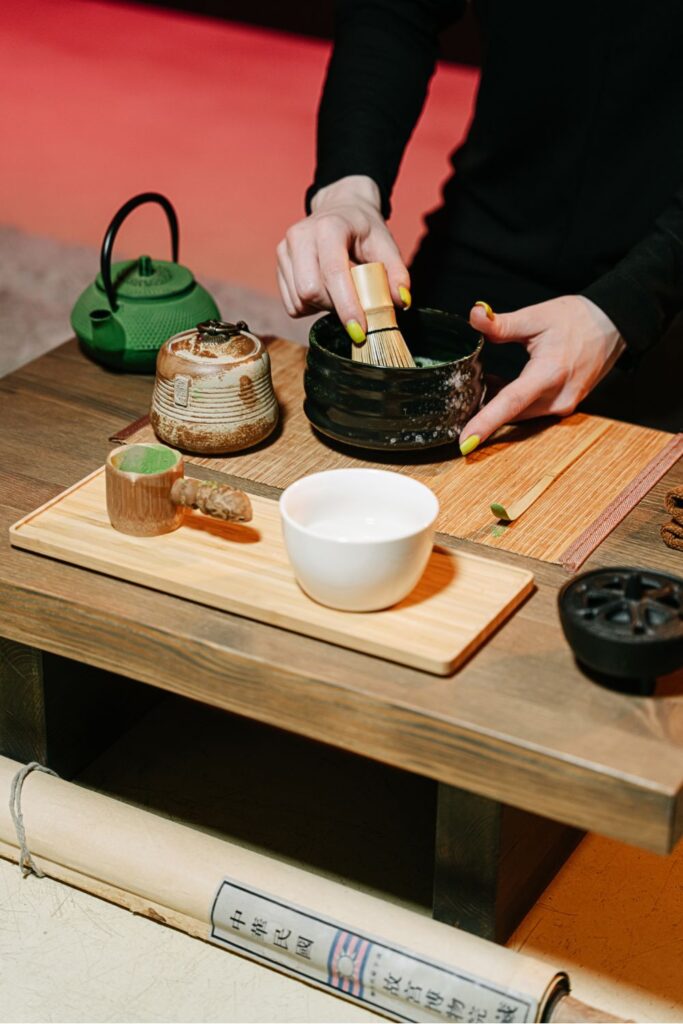
7. Matcha Latte: A Healthy Experience Without Compromise
Many people stick with coffee because they love the experience, the taste, and the ritual. The good news is that you don’t have to give that up.
Matcha latte:
- Is creamy and silky in texture.
- Has a delicious, naturally pleasant flavor.
- Is easy to customize with plant-based milks (almond, oat, coconut).
- Is naturally mildly sweet, so there’s no need for sugar.
Furthermore, it’s not just delicious, but also a functional drink that supports your body rather than draining it. Source
8. Common Objections to Matcha
One of the most frequently heard arguments against Matcha is that “it doesn’t wake me up enough.” This can often seem true at first, especially if your body has been used to strong coffee for years.
After all, Matcha doesn’t shock you, it doesn’t “slap you in the face” with the very first sip, and it doesn’t throw your nervous system into overdrive.
But in reality, that is not a disadvantage; rather, it’s one of its greatest strengths.
Common objections I often hear about Matcha:
- “I don’t feel the effect right away.”
- “It doesn’t rev me up the way coffee does.”
- “The taste is too mild, too soft, not strong enough.”
- “In the morning, I need that brutal wake-up call.”
- “It must be weaker because I don’t feel my heart pounding.”
These objections are understandable, but it’s important to know that Matcha can deliver the same experience, you just need to get used to it.
Personal experience
Honestly, I never really liked the taste of coffee, and I never found an alternative to it either. Whenever I had to drink it, all I noticed was that it revved me up, then made me nervous and stressed, and later I’d suddenly feel completely drained.
With Matcha, my experience is entirely different. What I love most about it is precisely the fact that it doesn’t rev me up, yet I stay energized all day long. I don’t feel that sudden jolt or that stress; instead, I simply noticed that I just feel good. My focus is clearer, I’m calmer, I don’t feel scattered, and the afternoon fatigue is gone too.
On top of all that, it’s especially important to me that Matcha supports my health, helps my metabolism, and I know that with each cup I’m nourishing my body with antioxidants, vitamins, and real nutrients.
For me, Matcha is a conscious choice. It’s a drink that doesn’t drain me, but instead supports me. And in the long run, that is exactly what we need if we want to stay healthy, energetic, and balanced.
Related articles:
11 irresistible Matcha latte recipes that will make you fall completely in love with Matcha
5 types of Matcha panna cotta — which one will be your new favorite healthy dessert?
5 secrets to perfectly smooth, crack-free Matcha macarons at home
Frequently Asked Questions
Yes, but it takes patience — in the first few days it may seem weaker, because your body is used to coffee’s shock effect rather than steady energy.
A serving of matcha contains about 70 mg of caffeine, while a cup of coffee has 95 to 150 mg — but in matcha, L-theanine slows down its absorption.
Because L-theanine binds to caffeine and slows its absorption, so the energy is released gradually and can last up to 6 to 8 hours.
Yes, it has a more alkaline pH and is gentler on the digestive system, while coffee can make the stomach more acidic.
Regular, high-dose coffee consumption can raise cortisol levels, while matcha may help lower them.
Both speed up metabolism, but matcha does so without raising cortisol, which can be more beneficial in the long run.
Matcha causes only minimal staining, unlike coffee’s tannins, which bind more strongly to tooth enamel.
Summary
If you’ve made it this far, you probably already sense that the Matcha vs coffee question is not about which one is “stronger,” but rather about which one is actually working for you. Coffee is fast, familiar, and reliable. But the energy crashes, the nervousness, the stomach cramps, and the hormonal effects are not coincidences; they are the consequences of regular, high-dose caffeine consumption.
Matcha doesn’t shock your system. It doesn’t give you a sudden jolt only to knock you flat afterward. Instead, it provides steady energy, calm focus, and real nutrients, from morning until evening. On top of that, it’s gentle on your stomach, it doesn’t stain your teeth, it supports your metabolism, and it reduces your cortisol levels.
This is not about never drinking your favorite coffee again. Rather, it’s about making a conscious decision: when does coffee actually give you something, and when do you just reach for it out of habit? Matcha can be there alongside it or instead of it. The choice is yours.
If you want to give it a try, start simply: tomorrow morning, instead of your second coffee, make yourself a Matcha latte. Give it a week and pay attention to what your body feels.
Leave a Reply